Long Term Food Storage Containers — What Actually Works
You can stock the right food in the wrong container and lose everything. I know because I’ve done it — bugs in my basement taught me that lesson more than 20 years ago.
The container is just as important as what goes inside it. The right container protects your investment for years or decades. The wrong one turns your carefully stocked pantry into an expensive lesson.
Here’s exactly what works — and what doesn’t — for long term food storage containers.
The Container Categories — What To Use For What
Not all food storage is the same — and not all containers are the same. Here’s how to match the right container to the right food.
Mylar Bags With Oxygen Absorbers — For True Long Term Storage
For anything you’re storing for years rather than months — grains like wheatberries, oats and rice, dried beans, lentils, and pasta — mylar bags with oxygen absorbers are the gold standard.
Mylar is a metallic film that blocks light, moisture, and oxygen completely. Combined with an oxygen absorber sealed inside the bag it creates an environment where nothing can survive or spoil. Wheatberries stored this way last 25-30 years. Rice and beans last 20-25 years. Pasta lasts 20+ years.
The process is simple: fill your mylar bag with your dry goods, drop in the appropriate size oxygen absorber, and heat seal the top with a flat iron or dedicated bag sealer. Store the sealed bags in food grade buckets with gamma lids for protection and organization.
Glass Canning Jars — For Canned Goods and Vacuum Sealed Staples
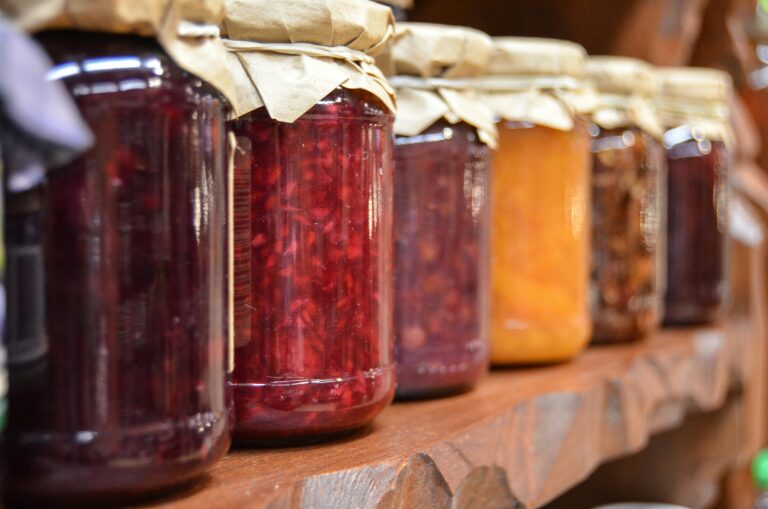
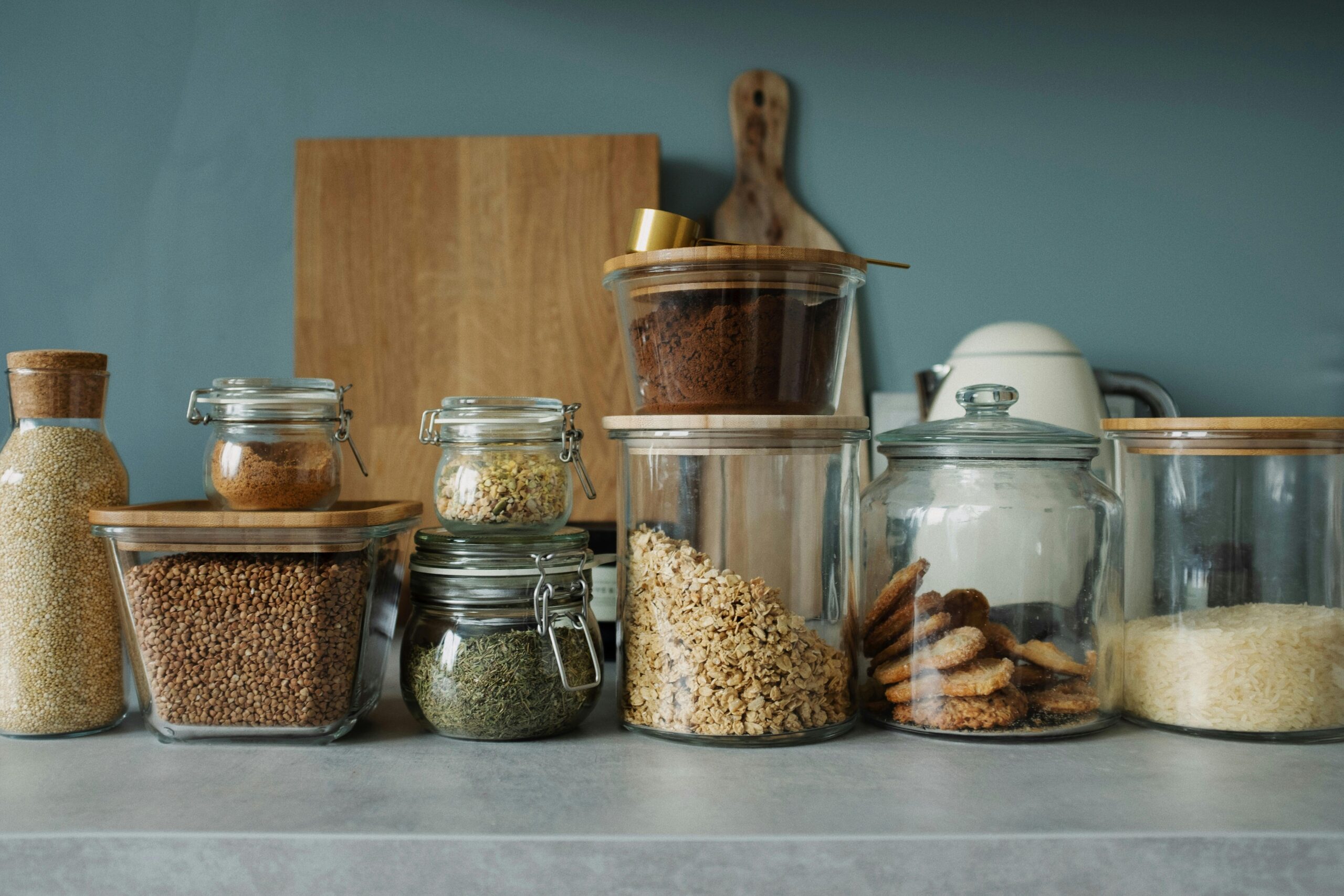
I use both wide mouth and regular mouth glass canning jars in all sizes for two purposes — home canned goods and vacuum sealed dry staples. I always like to have the half-gallon jars on hand for storing larger quantities, such as flour, sugar, and cereals.
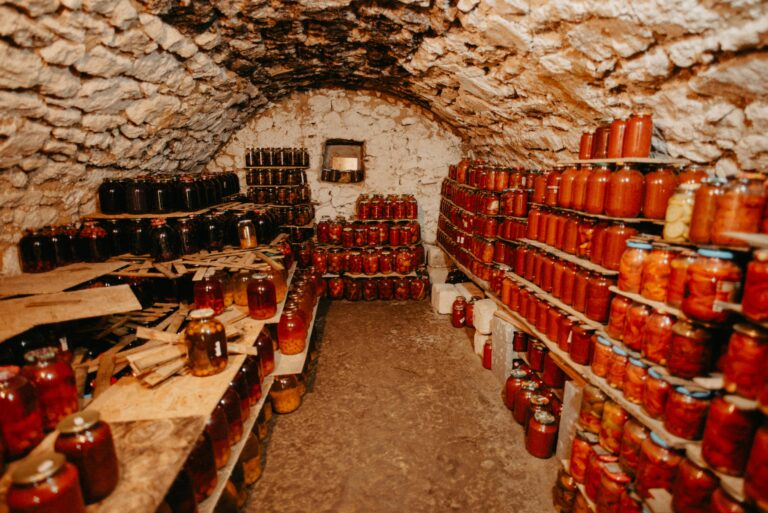
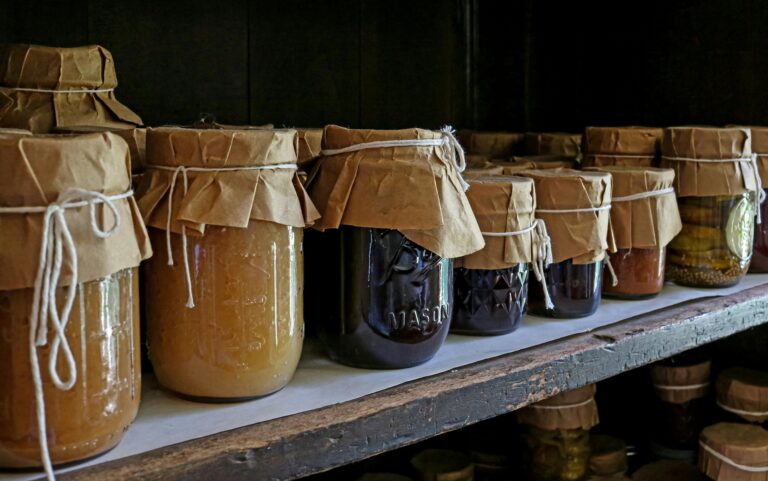
For home canning — tomatoes, green beans, salsa, chili, meats — glass canning jars are the only safe option. Properly canned goods in sealed jars last 1-5 years and sometimes longer.
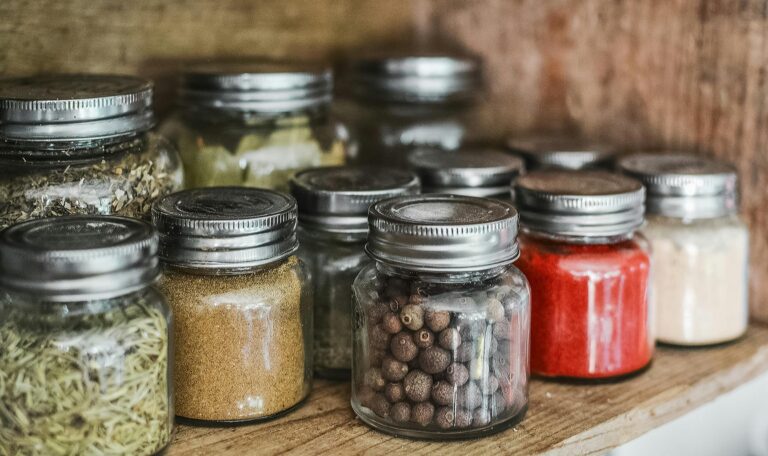
For dry staples like flour, yeast, baking powder, cornstarch, and bulk spices like cinnamon — I use a vacuum sealer with jar sealer attachment on my glass jars. This removes the oxygen from the jar and creates an airtight vacuum seal that dramatically extends shelf life. Flour that might last 6-12 months in its original bag can last 3-5 years vacuum sealed in a glass jar.
The Vacuum Sealer — An Underrated Pantry Tool
When my husband and I became empty nesters he made a very valid complaint — “we only have ingredients, there’s nothing to snack on.” So I started stocking crackers, granola, and snack foods.
The problem with snacks for two people is that they go stale or expire before you finish them. The vacuum sealer solved this completely. Now I vacuum seal opened packages of crackers, granola, cereals, and snacks in mason jars — removing the oxygen that causes staleness. Crackers that would go stale in two weeks last months. It’s one of the most practical tools in my kitchen, and it stays out on the counter because we use it almost daily.
Food Grade Buckets With Gamma Lids — For Bulk Storage
This is where I see people make the most expensive mistakes. They go to the home improvement store, grab a 5 gallon bucket, and fill it with rice or wheat. Then they wonder why their food is contaminated or tastes off.
Not all buckets are food safe. You must use food grade buckets — the ones rated for direct food contact. And once you have food grade buckets spend the money on gamma lids.
Gamma lids are the screw-on style lids that seal airtight but open and close easily — unlike standard bucket lids that require a tool to pry off and damage the seal every time. If you’re going to be accessing your buckets regularly gamma lids are non negotiable. They’re more expensive but they’re worth every penny.
You can find food grade buckets and gamma lids through Amazon — I’ve linked to my favorites throughout this article. You can also order through Azure Standard using my referral link — I earn points toward my own orders at no extra cost to you.
The Biggest Container Mistakes People Make
I’ve made most of these mistakes myself. Here’s what to avoid:
Mistake 1: Using Non-Food Grade Containers
This is the most common and most expensive mistake. Hardware store buckets, recycled containers that previously held non-food items, and random plastic bins from the garage are not food safe. They can leach chemicals into your food over time and contaminate everything inside.
Rule of thumb: if it didn’t come from a food safe source or isn’t specifically labeled food grade — don’t put food in it.
Mistake 2: Skipping the Oxygen Absorbers
Airtight isn’t enough for long term storage. Air itself — specifically the oxygen in it — is what allows insects, mold, and bacteria to survive and thrive in your stored food.
I learned this the hard way with bugs in my basement containers. Airtight containers keep moisture out. Oxygen absorbers eliminate the oxygen that pests and bacteria need to survive. You need both.
Mistake 3: Using the Wrong Size Oxygen Absorber
Oxygen absorbers are sized by cubic centimeters — the larger the container the larger the absorber you need. Using a 100cc absorber in a 5 gallon bucket won’t do the job. Match the absorber size to your container size — there are simple charts online that tell you exactly what size you need for each container.
Mistake 4: Standard Bucket Lids
If you’re using 5 gallon buckets with standard snap lids you’re damaging your seal every single time you open them. Standard lids require a tool to pry off and they never reseal as well as the first time.
Gamma lids — the screw top style — solve this completely. They seal airtight, open and close easily, and maintain their seal indefinitely. Yes they cost more. Buy them anyway, because they will last indefinitely, and save money over the long term.
Mistake 5: Storing in the Wrong Location
The best containers in the world won’t save food stored in the wrong place. Heat, light and moisture are the enemies of long term food storage.
Avoid: garages that get hot in summer, areas near appliances that generate heat, anywhere with direct sunlight, damp basements without moisture control.
Ideal: cool dark spaces with stable temperatures — interior closets, climate controlled basements, dedicated pantry spaces.
Mistake 6: Not Labeling Everything
This seems obvious until you’re staring at three identical mylar bags trying to remember which one is rice and which one is lentils. Label everything with contents and date sealed. My favorite hack is painter’s tape and a Sharpie marker — it’s designed to come off easily but won’t fall off on its own. No sticky residue, no label that tears when you try to remove it, no mystery bags. Just write and stick. When the contents change peel it off and relabel.
Date everything — and I mean all of it. You may think you’ll remember when you canned that apple butter but two years from now you absolutely will not. Write the date you sealed or canned it right on the label every single time. If you’re repackaging something that has a printed best by date go ahead and include that on your label too.
Here’s something worth knowing about those best by dates: when I volunteered at Gleaners — a food bank that distributes to families in need — I learned that they consider anything up to one year past the expiration date to still be safe for distribution. That’s not permission to eat spoiled food — use your eyes and nose always — but it does mean that a best by date is a quality guideline not an expiration cliff. Properly stored food is almost always safe well beyond what’s printed on the package. The crackers we vacuum seal in jars are proof of that — still perfectly fresh months past the date on the box.
Conclusion
The right containers make the difference between a pantry that lasts years and one that becomes an expensive lesson in what not to do.
Here’s the simple version:
For true long term storage — mylar bags with oxygen absorbers in food grade buckets with gamma lids. For home canned goods and vacuum sealed staples — glass canning jars. For snacks and opened packages — a vacuum sealer keeps everything fresh far longer than you’d expect.
Label everything with painter’s tape and a Sharpie. Date everything without exception. Store in cool dark spaces away from heat and light. Use food grade containers only — no hardware store buckets.
These aren’t complicated rules. They’re just the habits that separate a food storage system that actually works from one that sits in the corner of your basement waiting to disappoint you.
Good containers are an investment — but they’re a one time investment. Buy quality once and your containers will outlast the food inside them many times over.
Ready to build a real working pantry?
Get your free Pantry Essentials Checklist plus our complete pantry building system at the Deep Roots Homestead shop.
Ready to keep building your pantry system? Check out these related guides:
- [How to Stock a Pantry for the First Time (The Right Way)]
- [How to Build a Food Storage System on a Budget]
- [How to Stock a Pantry for 6 Months]
- [How to Build a Sustainable Food Storage System From Scratch]
Want to know more about who’s behind Deep Roots Homestead? We’re a family farm in central Indiana that has been in the family since 1854 — where we grow, raise, preserve, and cook as much of our own food as possible. You can read my full story here.