How to Stock a Pantry for 6 Months — A Real World Guide
Stocking a pantry for two weeks is a great start. But if you’re serious about learning how to stock a pantry for 6 months — that’s where real food security begins.
I’ll be honest with you — I have a very large dedicated pantry and I know not everyone has that luxury. But a six month supply isn’t about having a perfect space. It’s about having a system. And that system starts with expanding how you think about food.
In my first two articles we talked about stocking what your family actually eats and building a rotation system around a handful of regular meals. That foundation is essential. But to get to six months you need to go further — expanding your menu, thinking about staples, and asking yourself a hard question: if the grocery store shelves went empty tomorrow, how would you feed your family?
That question used to make me uncomfortable. Now it’s what drives every decision I make about our pantry. Here’s how to build a six month supply that actually works.
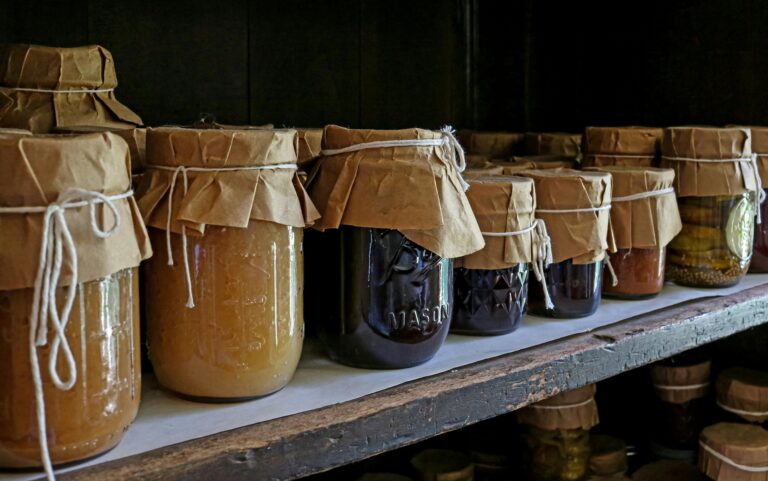
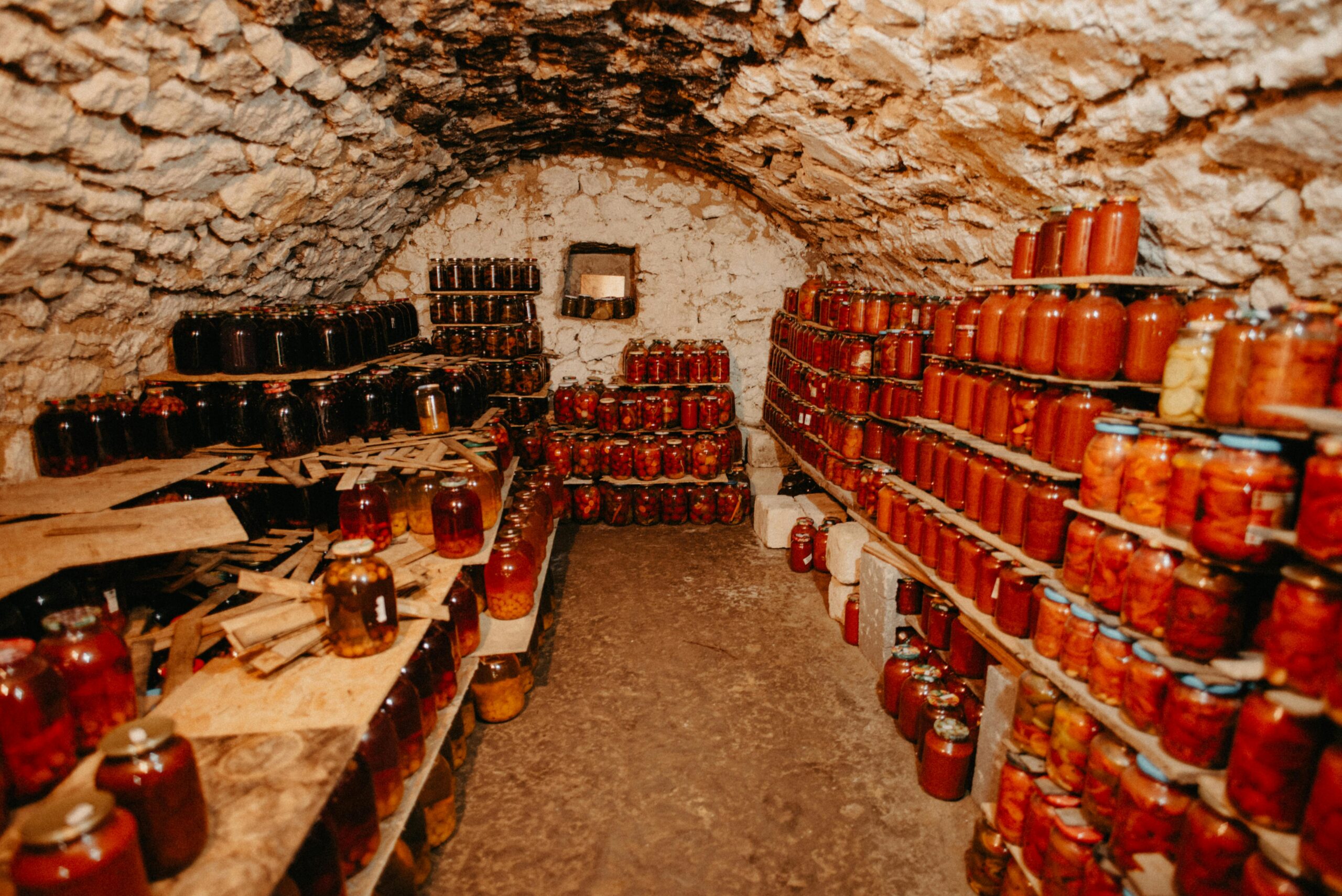
Building a 6-month pantry takes planning and a clear roadmap.
Start By Expanding Your Menu
When you’re building toward a six month supply the handful of meals we talked about in the beginning isn’t enough. You need more variety — both for nutrition and for sanity.
Think beyond your weekly rotation. What else does your family eat occasionally? What meals do you make for holidays, special occasions, or lazy weekends? Those meals need pantry representation too.
Start asking these questions:
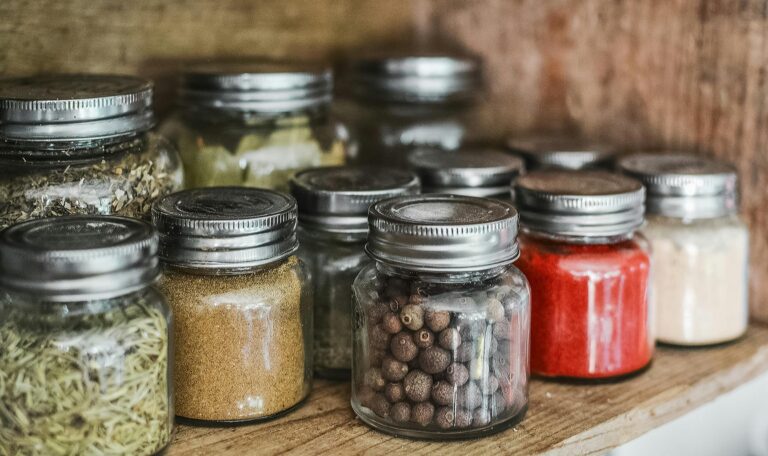
What staples do you need that you haven’t stocked yet? Herbs and spices are easy to overlook but they’re what make simple pantry meals taste like real food. Salt, pepper, garlic powder, onion powder, thyme, sage, oregano, cumin, chili powder — these are the difference between a meal that tastes like survival food and one your family actually enjoys.
Are there boxed convenience foods your family eats regularly that you could replace with homemade versions? This is one of my favorite strategies. I make my own homemade Rice-a-Roni mix and store it in my pantry — it’s simple, it’s delicious, and I know exactly what’s in it. [Link: Homemade Rice-a-Roni Mix — coming soon] I also make homemade Hamburger Helper mixes for quick easy weeknight meals without the chemicals and bioengineered ingredients you’ll find in the box. Making your own mixes means you control what goes in — and they store beautifully in your pantry for months.
Think About Meat
Meat is one of the trickier parts of a long term pantry — but it’s not impossible.
Canned chicken, canned tuna, and canned salmon are obvious pantry staples. But one of the best decisions I’ve made for our food storage was purchasing a half hog and one quarter of a cow.
When I purchased our beef I paid $1,000 from a local farm for a quarter cow — and I got lucky because it was on sale. Prices have since increased to around $1,200, but for that investment we received 100 pounds of meat. When you compare the cost per pound to the same cuts at the grocery store the savings are significant.
The half hog was equally worth it. We paid a $150 deposit upfront and about $300 more when all was said and done — so roughly $450 total for approximately 80 pounds of meat. Again, the cost per pound came in well below grocery store prices for comparable cuts.
And here’s what the price tag doesn’t capture — both animals were pasture raised. The meat is cleaner, healthier, and more nutritious than anything sitting in a grocery store case. You’re not just saving money. You’re getting a fundamentally better product.
If buying a quarter cow or half hog feels like too large an investment to start, look into splitting an order with a neighbor or family member. Half the upfront cost, same quality meat, and you’re still ahead of grocery store prices.
You do need to consider storage of bulk meat. Will you can the meat to make it shelf-stable? Will you use it in recipes and can it that way (such as canned beef stew or canned chili recipes)? Or will you store it in the freezer. I do recommend finding space for a small chest freezer, like this one.
We’re also fortunate to have a local farm nearby that sells individual cuts — so when we run out of bacon or need a specific cut before our next bulk purchase, I can just buy exactly what I need directly from them. Yes it costs a bit more per pound than buying in bulk, but it’s still a better product than anything at the grocery store and it keeps us from ever having to compromise on quality. Finding a local farm you trust for both bulk purchases and fill-in buying is one of the best things you can do for your long term food system.
We butcher our own meat chickens every year — about 45 birds that stock our freezer and cover our entire chicken supply for the year. Yes, our homegrown birds cost more per bird than a Costco rotisserie chicken at roughly $10 each. But here’s what I’m actually getting for that price: a significantly larger bird, raised on feed I chose, processed the way I want, with no additives or preservatives. I know exactly what that chicken ate from day one. You simply cannot buy that level of transparency at any grocery store at any price.
If raising your own meat birds isn’t realistic for your situation right now, look into buying directly from a local farm. You’ll pay more than grocery store prices but you’ll get the same transparency and quality — and you’ll be supporting someone in your community who is doing the work of raising food the right way.
Ask The Hard Questions
Here’s the exercise I want you to do right now: imagine the grocery store shelves went empty tomorrow. Not forever — just for six months. How would you feed your family?
Go through your meals one by one. Could you make them from your pantry?
How would you get bread? If you don’t know how to bake bread that’s a gap in your preparedness. Start learning now — I’ll be sharing a complete bread baking guide and video soon [Coming soon: How to Bake Bread From Scratch]. In the meantime stock bread flour and yeast in your pantry.
How would you get milk? This is where powdered milk becomes essential. I’ll be honest — I don’t love drinking powdered milk. But I use it regularly in cooking — macaroni and cheese, hamburger helper, baked goods. It disappears into recipes and nobody notices. And the shelf life makes it a pantry essential.
Unopened powdered milk lasts anywhere from 2-10 years past the best by date according to the USDA — and some nonfat varieties are shelf stable for up to 25 years. Once opened store it in an airtight container and use within 3 months for best quality.
How would you get cheese? I buy block cheese instead of shredded — shredded cheese is coated with anti-caking agents I’d rather avoid. Block cheese freezes beautifully. I also keep cheese powder on hand for longer term storage when refrigeration might not be reliable. It works perfectly in mac and cheese, sauces, and casseroles.
What about fresh produce? This is the hardest one to solve from a pantry. In an emergency situation you could survive six months on canned fruits and vegetables while you work on growing your own. Start by stocking canned versions of the produce you use most. Then make a long term plan to grow a garden — even a small one. You don’t need acreage. You need a few raised beds and some seeds.
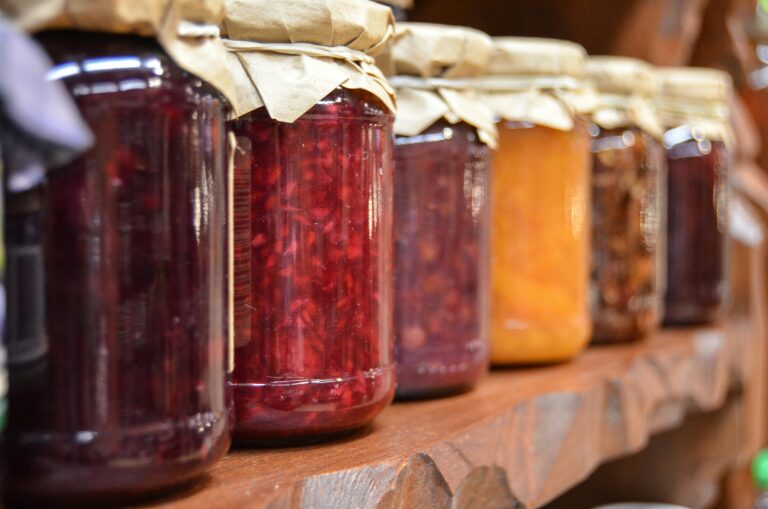
Once you’re growing your own the next natural step is learning to can your own harvest — and that’s where everything truly comes full circle. Instead of buying canned tomatoes you’re putting up jars of tomatoes you grew yourself. Instead of buying canned green beans you’re preserving the ones you picked that morning. I’ll be sharing a complete canning series here on Deep Roots Homestead — including step by step videos that walk you through everything from water bath canning basics to pressure canning — so you’ll have everything you need to get started. [Coming soon: The Complete Beginner’s Guide to Canning Your Own Harvest]
The Dairy Alternatives That Actually Work
A well stocked six month pantry needs solutions for dairy — not just powdered milk.
Evaporated milk is one of my favorites. It works beautifully in biscuits and gravy — just add the equivalent amount of water and use it exactly like regular milk. It’s richer than powdered milk and the flavor is much closer to fresh.
I also keep a significant supply of honey on hand. I drink a lot of hot tea and honey lasts literally forever — archaeologists have found 3,000 year old honey in Egyptian tombs that was still perfectly edible. Stock what you actually use and don’t worry about it expiring.
Coffee and tea are non-negotiable in our house. My husband drinks coffee, I drink tea. A six month pantry means six months worth of both. This sounds obvious but it’s easy to forget the things that make daily life feel normal — and in a long term disruption those things matter enormously for morale.
How to Stock a Pantry for 6 Months — Category By Category
Here’s how I think about the categories of a complete six month pantry:
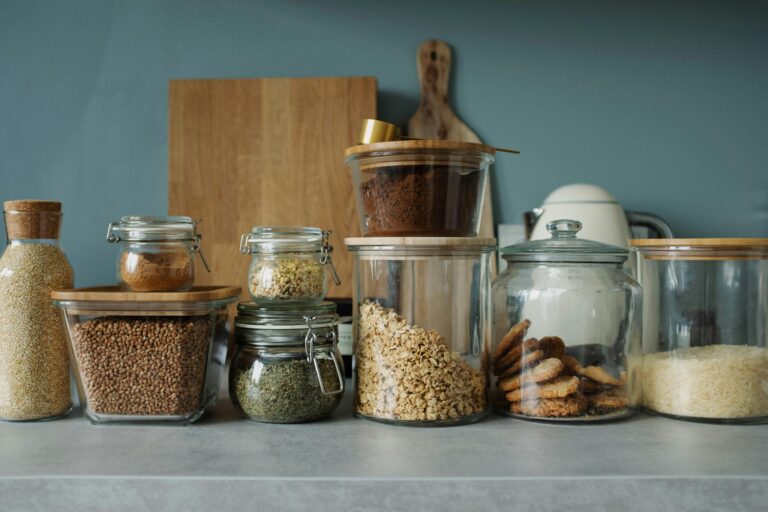
Grains and starches — flour, rice, oats, pasta, cornmeal, wheatberries. These are the foundation of most meals and store beautifully long term. Just be sure to store them properly. The best option is mylar bags with oxygen absorbers, and 5-gallon food-safe buckets with gamma lids. And of course, if you buy whole wheatberries, you will need a way to turn them into flour, so you will need to have a grain mill.
Proteins — canned chicken, tuna, salmon, beans, lentils, freeze dried meat if budget allows. Plus whatever you have in your chest freezer.
Canned vegetables and fruits — stock what you actually eat. Rotate regularly.
Dairy alternatives — powdered milk, evaporated milk, cheese powder, frozen block cheese.
Fats and oils — olive oil, coconut oil, vegetable oil, butter (frozen), lard or bacon grease if you render your own.
Sweeteners — sugar, honey, maple syrup. Honey lasts indefinitely. Stock plenty.
Herbs, spices and seasonings — this category is chronically understocked in most pantries. You can’t make food taste good without them.
Beverages — coffee, tea, hot cocoa. Stock what your family actually drinks.
Baking essentials — baking powder, baking soda, yeast, vanilla extract, salt.
Condiments and sauces — soy sauce, Worcestershire, hot sauce, vinegar, mustard. These add flavor variety to simple meals.
The Mindset Shift That Makes Six Months Possible
Getting to a six month supply requires a different mindset than getting to two weeks.
Two weeks is about security. Six months is about self sufficiency.
When you start thinking in terms of six months you stop buying food and start building infrastructure. You think about storage systems, rotation schedules, and meal planning differently. You start making things from scratch that you used to buy in a box. You start growing things you used to buy at the store.
That shift doesn’t happen overnight. It happened for me gradually over five years of building and refining our system. But every step toward six months is a step toward genuine food independence — and that feeling is worth every jar you put up and every mix you make from scratch.
The Bottom Line
A six month pantry isn’t built in a day — and it shouldn’t be. It’s built one category at a time, one purchase at a time, one jar at a time.
Start where you are. Stock what you eat. Expand your menu gradually. Learn to make from scratch what you used to buy in a box. Find a local farm you trust. Plant a garden when you’re ready.
Don’t feel like you have to stock up on it all at once! If you order from somewhere like Azure Standard, just order a little at a time. (Note: this is a referral link — if you sign up I earn points toward my own Azure orders at no extra cost to you.)
Six months from now you could have a pantry that could genuinely feed your family through almost anything — a job loss, a supply chain disruption, a harsh winter, or simply a season of life when getting to the grocery store just isn’t possible.
That’s not extreme. That’s wisdom. And it’s the kind of wisdom that used to be completely normal — passed down from generation to generation on farms exactly like ours.
Ready to take the guesswork out of building your 6-month pantry?
The Deep Roots Homestead 6-Month Pantry Building Timeline walks you through exactly what to do week by week — a complete 24-week plan built from 30 years of real homesteading experience.
Or get the complete pantry system in our shop — including a free Pantry Essentials Checklist to get you started.
Ready to keep building? Check out these related guides:
- [How to Stock a Pantry for the First Time (The Right Way)]
- [How to Build a Food Storage System on a Budget]
- [How to Go Months Without Going to the Grocery Store]
Want to know more about who’s behind Deep Roots Homestead? We’re a family farm in central Indiana that has been in the family since 1854 — where we grow, raise, preserve, and cook as much of our own food as possible. You can read my full story here.