How to Stock a Pantry for an Emergency
Most emergency preparedness guides focus on food. But if you really want to know how to stock a pantry for an emergency — truly stock it — you need to think about a lot more than canned goods.
Water. Power. Heat. The ability to cook without electricity. The medications you take every day. Contacts so you can see.
A truly prepared household thinks beyond the pantry. It thinks about every system that keeps daily life functioning — and what happens when any one of those systems fails.
I want to be clear about something before we go further: this isn’t about fear or doomsday thinking. Everything I’m about to share is just practical wisdom — the kind of thing our grandparents knew without thinking about it because they lived closer to the reality of what it takes to keep a household running. We’ve just forgotten.
Here’s what a truly emergency ready homestead actually looks like, and what it really means to stock a pantry for an emergency — and why it goes so much further than food.
How to Stock a Pantry for an Emergency — Starting With Power
The first thing most people think about in an emergency is food. But food is actually one of the easier problems to solve if you’ve been building a pantry system. The harder problem — the one that affects everything else — is power.
When the power goes out everything changes. Your freezer stops working. Your well pump stops running. Your electric stove is useless. Your lights go dark. In winter your heat may fail.
Here’s how we handle each of those problems on our homestead so you can stock a pantry for an emergency:
The Freezer Problem
We have two chest freezers stocked with meat. A short term power outage — a few hours to a day or two — we handle with a generator. But for a longer outage the plan is different: we can all of it.
I keep enough canning jars and lids on hand specifically for this scenario. If we lost power for an extended period I would fire up our propane burner outside and start canning every piece of meat in those freezers before it spoils. It’s a lot of work but it’s a plan — and having a plan is everything.
The Water Problem
We have a well which means when the power goes out so does our water. Short term a generator solves it. Long term we have a hand pump we would drop down into the well to pump water manually.
Beyond that we have significant water reserves already in place — our hot water heater holds about 40 gallons, we have a 600 gallon hot tub in the basement that serves as an emergency water reserve, and we keep an additional 40 gallons stored in the pantry.
I also can water when I have leftover space in the canner. Canned water is safe indefinitely. For water stored in containers the CDC recommends rotating it every 6 months — after that the chlorine that keeps bacteria at bay starts to dissipate.
The Cooking Problem
No electricity doesn’t mean no cooking — not on our homestead. We have a wood stove we heat with in winter and can cook on. We have a three burner propane stove outside and a Blackstone griddle for warmer months. And we have a fire pit that works in any season.
Multiple cooking options means a power outage never means an empty stomach.
The Heat Problem
In winter we heat with a wood stove — which means we’re completely independent of the electrical grid for heat. If we lost power in January we would close off unnecessary rooms, move closer to the wood stove, and pile on extra blankets from the linen closet where we always keep a generous supply.
We know not everyone has a wood stove — and that’s okay. Here are some practical alternatives worth knowing about:
A propane indoor safe heater like the Mr. Heater Buddy is one of the most popular and affordable options — rated for indoor use with built in safety shutoffs for low oxygen and tip over situations. Keep propane stored safely and follow all ventilation guidelines.
A DIY clay pot heater uses tea light candles and terra cotta pots to generate surprising warmth for a small space. It won’t heat a whole house but it can make a single room significantly more comfortable.
A DIY solar heater built from aluminum cans is a longer term project but genuinely effective — there are excellent tutorials online and the materials are nearly free.
Setting up a small camping tent inside your home is an underrated emergency heat strategy — body heat accumulates inside the tent creating a significantly warmer sleeping environment than the open room.
A kerosene heater rated for indoor use provides strong radiant heat for a single room — keep it ventilated and never run it overnight while sleeping.
Whatever your heat backup plan is — have one before you need one. And always keep carbon monoxide detectors with fresh batteries if you’re using any fuel burning heat source indoors.
Make sure you also keep matches on hand, for several uses, as well as waterproof matches.
Beyond Food and Power — The Things Nobody Talks About
Food storage and power backup get most of the attention in emergency preparedness conversations. But there are things that matter just as much that almost nobody talks about when you stock a pantry for an emergency.
Medications and First Aid
We take very few prescription medications in our household — but for the ones we do take we always order 90 day supplies and order them earlier than necessary to build up a small buffer stock. If you depend on a medication to function that medication is as critical to your emergency preparedness as food and water.
Our first aid kit stays stocked with over the counter medications — pain relievers, antihistamines, cold and flu medicine, antidiarrheal, antacids. In an emergency a headache or stomach bug becomes a much bigger problem if you have nothing to treat it with.
We also keep potassium iodide on hand — a precautionary measure for certain nuclear or radiological emergencies. It’s inexpensive, it stores indefinitely, and it’s the kind of thing you hope you never need.
Water Purification
Beyond our stored water we have multiple water purification options. We keep a LifeStraw kit, water purification tablets, and a larger gravity fed filtration system that uses the same technology as LifeStraw. If our stored water ran out we could purify water from almost any source.
These tools are inexpensive and take up almost no space — there’s no reason not to have them.
Laundry Without Electricity
This one surprises people. How do you wash clothes without a washing machine?
We have a hand clothes washer — a simple plunger style device that agitates clothes in a bucket, as well as a washboard. Combined with our clothesline out back it means laundry still happens in a long term outage. Clean clothes matter more than people realize for both comfort and morale.
Light Without Electricity
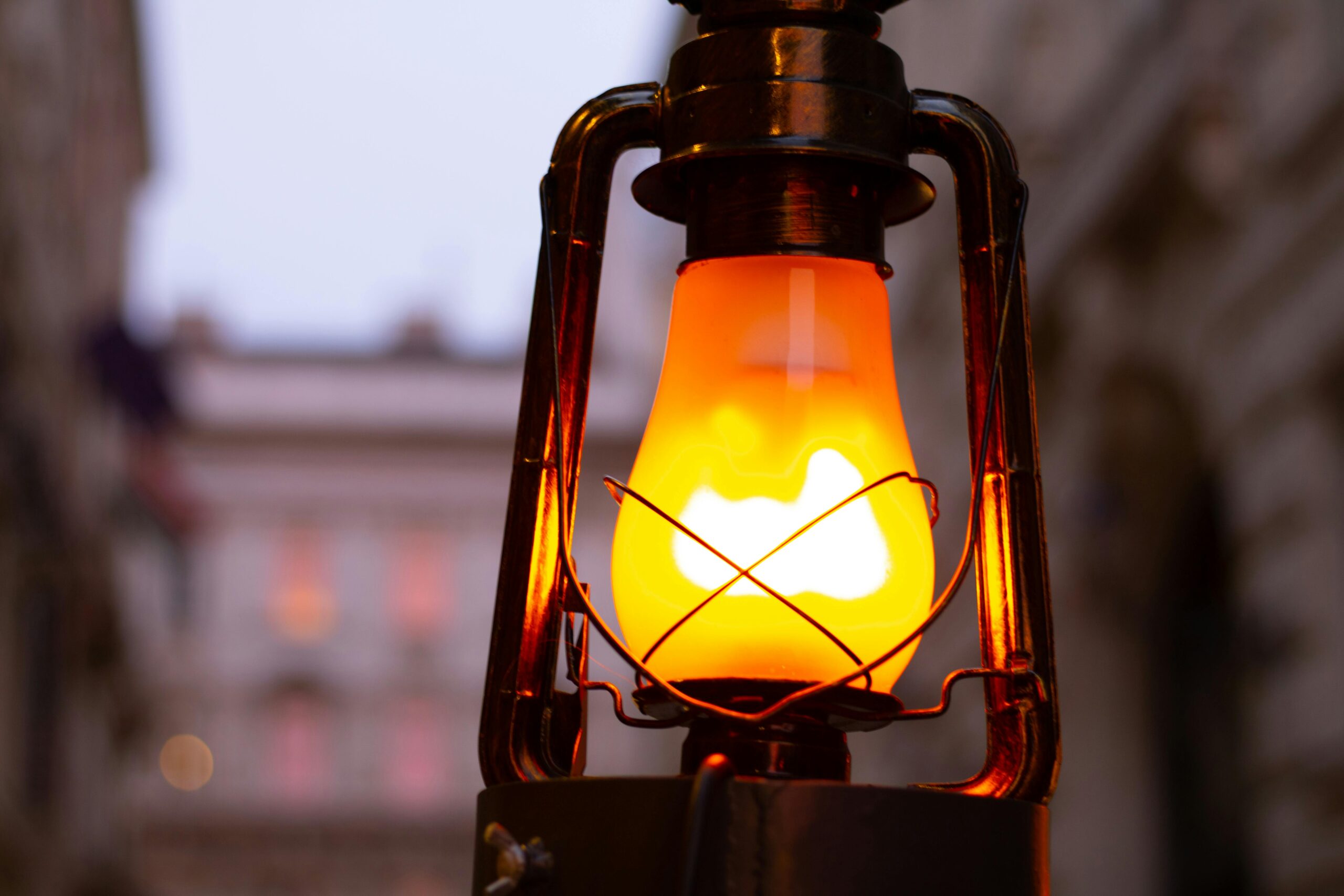
We keep candles, oil lanterns and lantern oil, and battery powered lights throughout the house. In a power outage we can light every room we need without any electricity. We especially like solar rechargable lights, and have several of those on hand.
The Grab and Go Option
We have MREs — Meals Ready to Eat — that we inherited from our children who served in the Marine Corps (you can purchase these supply kits and they accomplish the same goal). We keep those specifically for a grab and go scenario where we might need to leave quickly. We also keep some freeze dried food for the same reason.
Here’s a tip for rotating freeze dried stock that most people miss: use it on camping and hiking trips. It’s genuinely good food, it gets used and rotated naturally, and you’re not just stockpiling things you never touch.
Staying Cool Without Electricity — The Clay Pot Refrigerator
One of the most fascinating things we’ve learned is how to build a refrigerator from clay pots, sand and water — an ancient technique called a zeer pot. Two clay pots of different sizes, wet sand between them, and evaporation does the work. It won’t keep things as cold as a refrigerator but in a warm weather emergency it can meaningfully extend the life of perishables.
The Mindset of True Emergency Preparedness
Here’s what I want you to take away from everything in this article:
Emergency preparedness isn’t about fear. It isn’t about expecting the worst. It isn’t about building a bunker or stockpiling weapons or believing civilization is about to collapse.
It’s about being a capable, self sufficient adult who has thought through what their household needs to function — and made reasonable provisions for those needs. It’s when you have stocked a pantry for an emergency.
Our grandparents didn’t call it emergency preparedness. They called it common sense. They kept a root cellar stocked because winter came every year. They kept a wood pile because the cold came every year. They kept a well because the water needed to come from somewhere. They knew how to do things — fix things, grow things, preserve things, make things — because those skills were simply part of being a functional adult.
Somewhere in the last 75 years we outsourced all of that. We handed our food supply to grocery stores, our heat to utility companies, our water to municipal systems, our light to the electrical grid. And most of the time that works fine.
Until it doesn’t.
The goal of emergency preparedness isn’t to live in fear of the moment it doesn’t work. The goal is to build enough capability and enough supply that when something goes wrong — a storm, a job loss, a supply chain disruption, a power outage — your household keeps functioning. Calmly. Without panic. Without scrambling.
That calm is what I felt during the snowstorm. That calm is what I felt when I saw the potato prices had tripled. That’s what all of this is really about.
Not survival. Just calm.
Conclusion
Emergency preparedness doesn’t have to be overwhelming. It doesn’t have to be extreme. And it doesn’t have to happen all at once.
Start with your pantry. Build your food storage gradually using the system we’ve talked about in this series. Then think about water. Then power. Then the things nobody talks about — medications, light, laundry, heat alternatives.
Every step you take makes your household more capable and more calm. Not because you’re afraid of what might happen — but because you’ve thought it through and made a plan.
Here’s a quick summary of what a truly prepared household looks like:
A stocked pantry deep enough to feed your family for months. Multiple water sources and purification options. A plan for power — generator for short term, alternatives for long term. Multiple cooking options that don’t require electricity. A heat backup plan that doesn’t depend on the grid. A well stocked first aid kit and medication buffer. Light sources that work without power. A grab and go option for worst case scenarios.
None of this is extreme. All of it is practical. And every single piece of it is buildable — one step at a time, on any budget, in any size home.
Ready to start or keep building? Check out these related guides:
- [How to Stock a Pantry for the First Time (The Right Way)]
- [How to Build a Food Storage System on a Budget]
- [How to Stock a Pantry for 6 Months]
- [How to Go Months Without Going to the Grocery Store]
- [How to Build a Sustainable Food Storage System From Scratch]
Want to know more about who’s behind Deep Roots Homestead? We’re a family farm in central Indiana that has been in the family since 1854 — where we grow, raise, preserve, and cook as much of our own food as possible. You can read my full story here.