How to Build a Sustainable Food Storage System From Scratch
Most people think they have a food storage system. They call it the grocery store.
And for most of modern history that worked fine. You run low on something, you drive five minutes, you restock. Simple, convenient, reliable.
Except it isn’t reliable. Not really. The grocery store supply chain is a fragile web of shipping routes, fuel costs, trucking companies, international trade agreements, and distribution centers — and when any one of those things breaks down the shelves go empty fast. We saw it during COVID. We saw it when tariffs were first implemented and container ships sat in the bay waiting to unload. We see it every single time a snowstorm hits and people panic buy bread and milk like the world is ending.
The grocery store isn’t your food storage system. It’s someone else’s. And you have no control over it — they control the availability and the cost. Every price increase, every empty shelf, every out of stock notice is a reminder that your food supply is in someone else’s hands.
A sustainable food storage system is different. It’s yours. You build it, you maintain it, you use it every single day. And the key word is sustainable — not a bunker you fill once and forget, but a living system that becomes simply how you live.
Here’s how to build one from scratch.
What Makes a Food Storage System Truly Sustainable
The word sustainable gets thrown around a lot. In the context of food storage it means one specific thing: a system you actually use.
That sounds obvious. But most food storage systems fail because they’re built for emergencies only — filled once, stored away, and forgotten until something goes wrong. By then the food is expired, the system is disorganized, and the whole thing feels like a waste of money.
I know this from personal experience. Many years ago I tried stocking wheat, beans and rice — just in case of an emergency. I put it in the corner of the basement in containers that were not made for long term food storage and I just forgot about it. A few years went by and as I cleaned the basement I found those containers — filled with bugs. I had to throw it all away.
Had I simply learned at that time how to store food correctly I wouldn’t have wasted it. And had I developed a system to actually use what I purchased that food would still be good today — more than 20 years later. Wheatberries stored properly in mylar bags with oxygen absorbers last up to 30 years. I threw away food that could have outlasted two decades of my life.
That experience taught me the most important lesson in food storage: a system you don’t use isn’t a food storage system. It’s just stuff in your basement waiting to go bad.
A truly sustainable food storage system is built around your everyday life — not around a hypothetical disaster. You stock what you eat. You eat what you stock. When you use something you replace it. That cycle — use and restock, use and restock — is what makes the system self sustaining. It never depletes because you never let it.
At first it feels like a project. Like something you’re building. And you are. But somewhere along the way — usually around month three or four — it stops feeling like a project and starts feeling like just how you live. You stop thinking about food storage and start thinking about your pantry the way you think about your kitchen. It’s just there. It’s just part of life.
That’s the goal. Not a bunker. Not a prepper stockpile. Just a deeply stocked kitchen that gives you complete freedom from the fragile system everyone else depends on.
Building a Sustainable Food Storage System — The Foundation
Building a sustainable food storage system from scratch starts with three non negotiable foundations. Get these right and everything else falls into place.
Foundation 1: Stock What You Actually Eat
This is the rule that fixes everything. Not a generic list from the internet. Not what a prepper website tells you to buy. What your family actually eats every single week.
Go back to basics. Write down your 10-15 most common meals. List every ingredient. That’s your pantry list. Stock those ingredients deeply and you have a system that sustains itself naturally because you’re cooking from it every day.
Foundation 2: Store It Correctly
The bugs in my basement taught me this lesson the hard way. Food stored incorrectly isn’t food storage — it’s just food waiting to be thrown away.
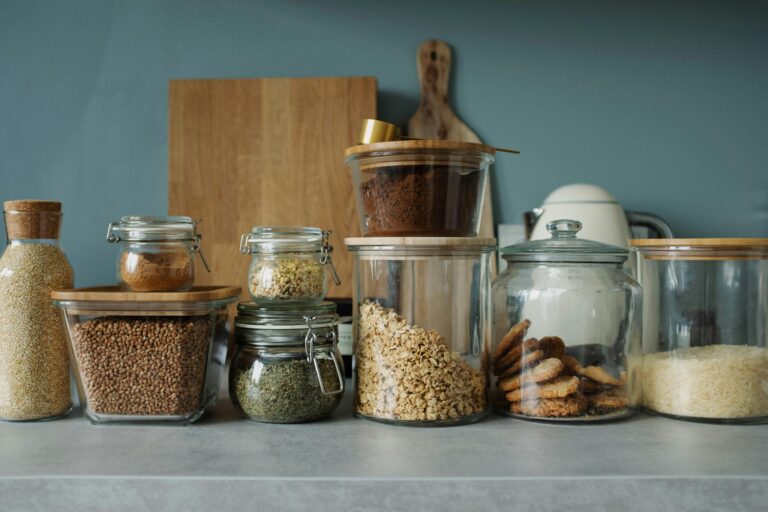
Dry goods go in airtight containers. Long term staples go in mylar bags with oxygen absorbers stored in food grade buckets with gamma lids. Canned goods stay in cool dark spaces away from temperature fluctuations. Rotate everything — first in first out, always.
Proper storage isn’t complicated. But skipping it is expensive.
Foundation 3: Use It and Replace It
This is what makes the system sustainable instead of just a one time project. Every time you use something from your pantry you add it to your restock list. Every time you shop you replenish what you used.
The pantry never depletes because you never let it. That’s the whole system.
Building Your System From Scratch — Step by Step
If you’re starting from zero here’s exactly how to build a sustainable food storage system without overwhelming yourself or breaking the bank.
Step 1: Start With Two Weeks
Don’t try to build six months of food storage overnight. Start with two weeks. Stock enough of your regular meals and pantry staples to get through two weeks without a grocery run. That’s your foundation.
Two weeks is achievable. It’s affordable. And it gives you a real taste of what food independence feels like — which is usually enough motivation to keep going.
I cover exactly how to do this in detail here — [How to Stock a Pantry for the First Time (The Right Way)]
Step 2: Expand to One Month
Once two weeks feels solid expand to one month. Same process — stock what you eat, rotate regularly, replace what you use. Add more variety. Start thinking about staples beyond your regular meal rotation — grains, beans, baking essentials, spices.
For tips on building your supply without breaking the bank check out — [How to Build a Food Storage System on a Budget]
Step 3: Build to Three Months
Three months is where the system starts to feel real. You have enough depth that a job disruption, a health crisis, or a supply chain hiccup doesn’t send you into a panic. Three months of food security changes how you feel about the world.
Step 4: Push to Six Months and Beyond
Six months is genuine food independence. At this point you’re not just prepared — you’re free. Free from weekly grocery runs, free from price spikes, free from empty shelves.
Here’s a real example of what that freedom looks like in practice. I recently went to Costco to restock potatoes for canning. I discovered that in the year since I had originally stocked up the price had tripled. Tripled! But because I still had plenty on hand I only needed one bag — I wasn’t desperate, I wasn’t panicking, I wasn’t paying triple the price out of necessity. And now I’m growing my own potatoes from that bag instead of ever paying that price again.
That’s what six months of food storage buys you. Not just security. Options. The ability to say no to a price that doesn’t make sense and find a better way.
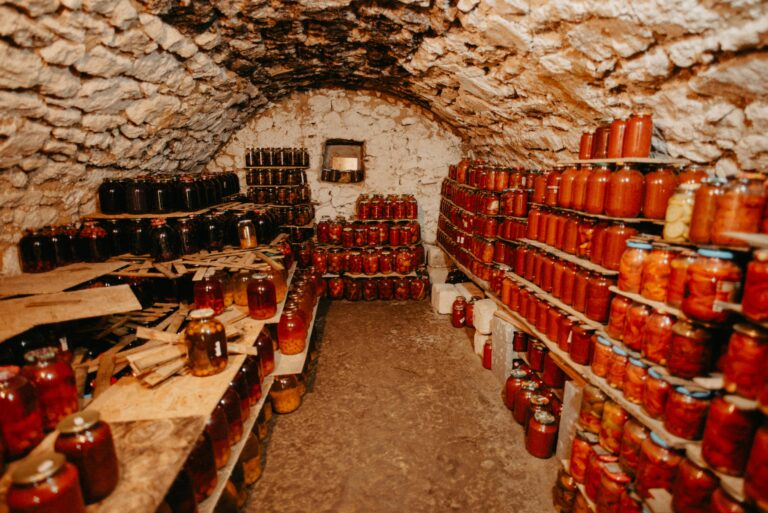
Beyond six months you’re building toward a full year — which is where we are on our farm. A year’s worth of food means almost nothing the outside world does to the food supply affects us directly.
For a complete guide to building a six month supply check out — [How to Stock a Pantry for 6 Months]
The Consistency Factor — Why Most People Fail and How Not To
Here’s the honest truth about why most food storage systems fail: people treat it like a project instead of a lifestyle.
They get motivated — usually after a news story, a weather event, or a close call — and they go out and spend a few hundred dollars stocking up. Then life gets busy. They use a few things without replacing them. The pantry slowly depletes. Six months later they’re back where they started.
The fix isn’t motivation. Motivation comes and goes. The fix is consistency — small intentional habits that run on autopilot whether you’re motivated or not.
Here’s what consistency looks like in practice:
Every time you use something from your pantry it goes on your restock list immediately. Not later. Not when you remember. Right then.
Every time you shop you buy extras of what you use regularly. Not a cart full. Just a few extras.
Once a month you do a quick pantry audit — rotate, check dates, note what needs restocking.
That’s it. Three habits. None of them take more than a few minutes. But done consistently over months and years they build something extraordinary — a food system that runs itself.
The people who succeed at this aren’t more motivated than the people who fail. They just made it a way of living instead of a project to finish. There is no finish line. There’s just the pantry — always stocked, always rotating, always there.
The Bigger Picture — Why This Way of Living Matters
Building a sustainable food storage system isn’t just about being prepared for emergencies. It’s about something bigger than that.
It’s about reclaiming control over one of the most fundamental aspects of your life — how you feed your family.
For most of human history people grew, raised, preserved, and stored their own food. They knew where it came from. They knew what was in it. They knew that if something went wrong with the outside world their family would still eat.
Somewhere in the last 75 years we handed all of that over to a system we don’t control — and most of us didn’t even notice it happening. The grocery store became so convenient, so reliable, so normal that we forgot we ever did it any other way.
But we did do it another way. Our grandparents did it. Our great grandparents did it. The skills exist. The knowledge exists. And more people than ever are realizing they want it back.
That’s what Deep Roots Homestead is about. Not fear. Not extremism. Not prepping for the apocalypse. Just the quiet, practical wisdom of knowing how to feed yourself — the way humans have always known how to feed themselves until very recently.
A sustainable food storage system is the foundation of that wisdom. Build it gradually. Use it daily. Pass it on.
The Bottom Line
Building a sustainable food storage system from scratch isn’t complicated. But it does require a fundamental shift in how you think about food.
Stop thinking of the grocery store as your food supply. Start thinking of your pantry as your grocery store.
Stock what you eat. Store it correctly. Use it and replace it. Build gradually from two weeks to a month to three months to six months and beyond. Make it a habit not a project. And watch what happens to your relationship with food, with money, and with the quiet confidence that comes from knowing your family is taken care of no matter what.
That confidence is what I felt during the snowstorm when everyone else was panicking. That confidence is what I felt when I saw those potato prices had tripled. That confidence is what I feel every single morning when I walk into my pantry and see what five years of consistent intentional building looks like.
It didn’t happen overnight. It won’t for you either. But every jar you put up, every bulk order you place, every meal you pull from your pantry instead of driving to the store — it all adds up. Faster than you think.
Start today. Start small. Just start.
Building a sustainable food storage system from scratch isn’t complicated.
Ready to begin? Here’s your roadmap:
- [How to Stock a Pantry for the First Time (The Right Way)]
- [How to Build a Food Storage System on a Budget]
- [How to Stock a Pantry for 6 Months]
- [How to Go Months Without Going to the Grocery Store]
Want to know more about who’s behind Deep Roots Homestead? We’re a family farm in central Indiana that has been in the family since 1854 — where we grow, raise, preserve, and cook as much of our own food as possible. You can read my full story here.